
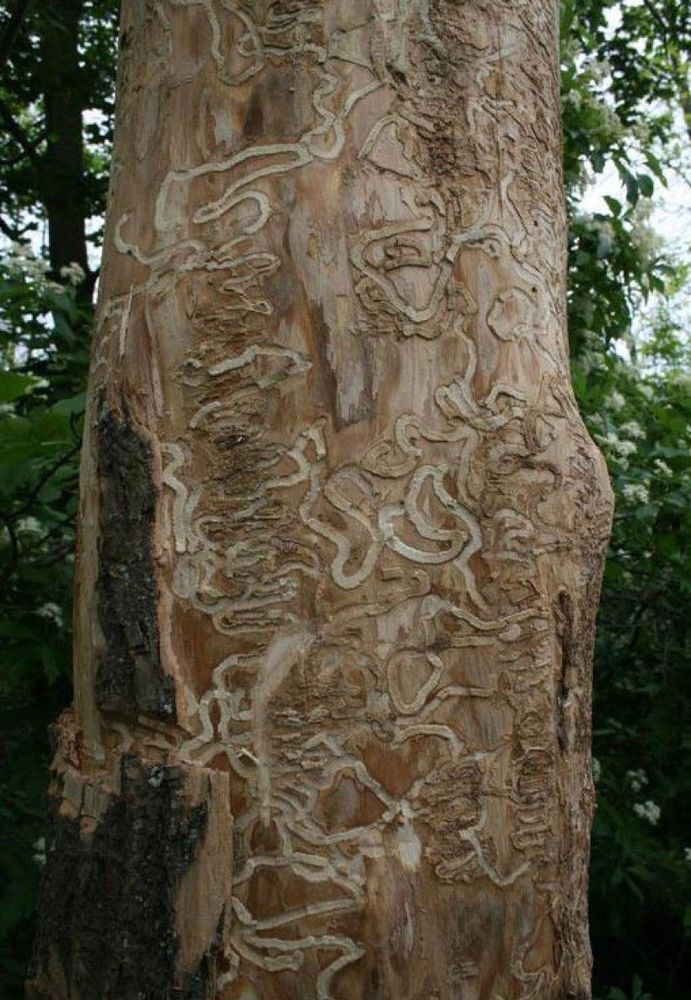
In April 2024, the South Dakota Department of Agriculture and Natural Resources notified the City that Emerald Ash Borer (EAB) had been detected and likely present for at least two years, with the initial infestation identified at Westerman Park. In response, Lennox developed and has now amended its Emerald Ash Borer Response Plan—an evolving framework designed to guide the community through assessment, engagement, mitigation, and eventual recovery.
Unlike sudden natural disasters, the City is treating the EAB infestation as a slow-moving event that will unfold over many years. While the damage is less immediate, the long-term impacts are substantial. The loss of hundreds of ash trees is expected, fundamentally altering Lennox’s tree canopy. The City is encouraging residents, businesses, and local leaders to approach this challenge with the same cooperative spirit that defined recovery efforts following the August 2021 tornado—working together toward a resilient outcome.
Initial efforts in 2024 focused on assessment and early mitigation. A citywide inventory of ash trees led to the removal of approximately 160 trees identified as being in poor or fair condition. Following those removals, roughly 150 ash trees remain within public spaces, including the right-of-way and city parks. In June 2025, the City initiated treatment efforts in Westerman Park, applying protective treatments to 13 green ash trees identified as strong candidates for preservation.
However, the majority of Lennox’s ash tree population exists on private property. An estimated 800 to 900 ash trees are located on residential and commercial lots throughout the community. These trees represent both a challenge and an opportunity. If left untreated, they will decline rapidly—often within a year once symptoms become severe—posing safety risks to people, structures, and infrastructure. In some areas of southern Lennox, ash trees are already showing more than 50 percent canopy loss, signaling imminent failure.
A central component of the amended plan is public engagement. Through 2026, the City will prioritize education and outreach to ensure residents understand the risks and responsibilities associated with EAB. This effort includes newsletters, mailers, social media updates, and local news coverage. In addition, Lennox will host a public open house in the summer of 2026 featuring regional experts to answer questions and provide guidance on treatment and removal options.
Policy measures will also play a key role moving forward. The City Council is expected to consider declaring all ash trees a public nuisance in 2026, with enforcement beginning in 2027. This designation would allow the City to require removal of all untreated trees. Recognizing the financial burden this may place on property owners, Lennox is developing a special assessment option that allows removal costs to be repaid over a 10-year period, helping balance public safety with affordability.
Ongoing assessment and mitigation efforts are scheduled to continue in 2027. Westerman Park and all ash trees within the public right-of-way will be reassessed to determine their condition and appropriate course of action. Trees in good condition may continue on a treatment cycle, typically every two years, while those in decline will be scheduled for removal. Property owners who wish to preserve boulevard trees adjacent to their property may do so through consistent, professionally applied treatment, provided documentation is submitted to the City. Trees that are not treated by a professional will not be considered treated for the purposes of this plan, and will be removed.
The City also plans a comprehensive inventory of ash trees on private property in 2027. This effort will help identify risks, guide enforcement decisions, and provide a clearer picture of the community’s overall tree canopy. Importantly, the plan clarifies that self-treatment by property owners will not be considered effective; only licensed applicators using approved methods will meet City standards.
While much of the plan focuses on loss and mitigation, recovery remains a central goal. Lennox has secured a 2026 Urban Forestry Grant from the South Dakota DANR to support reforestation efforts, particularly in West Evergreen Park. The City Council is also considering incentive programs, such as rebates or cost-sharing initiatives, to encourage residents to plant replacement trees on private property.
The amended Emerald Ash Borer Recovery Plan reflects a realistic but forward-looking approach. It acknowledges the scale of the challenge while emphasizing shared responsibility and long-term investment. Through careful planning, community engagement, and strategic action, Lennox aims not only to manage the impacts of EAB, but to emerge with a more diverse, resilient, and sustainable urban forest for the future.